

Embodied Intelligence
From Sensing to Collaboration
The Embodied Intelligence Programme Grant has been split into six themes, each targeting a different aspect of robotic intelligence: Sense, Act, Interpret, Navigate, Coordinate, and Collaborate. By addressing these key themes, Embodied Intelligence is helping to lay the foundation for a new era of intelligent, adaptable, and collaborative robots that can transform industries such as Social Care, Manufacturing, Logistics and Agriculture.
Image
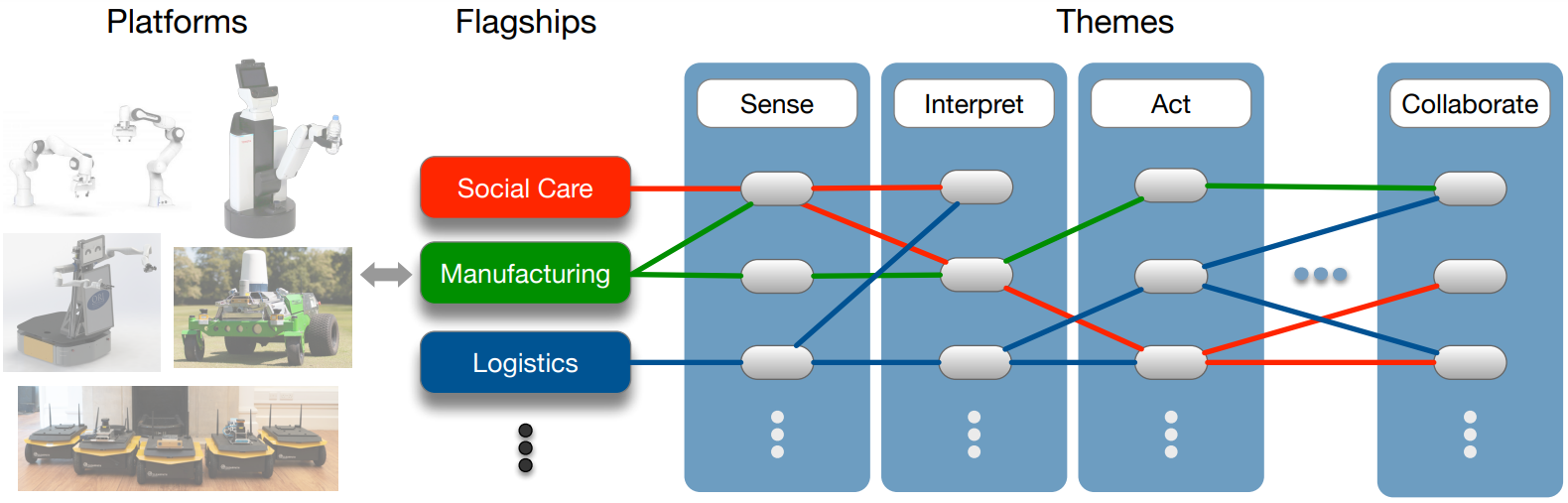
Research Themes
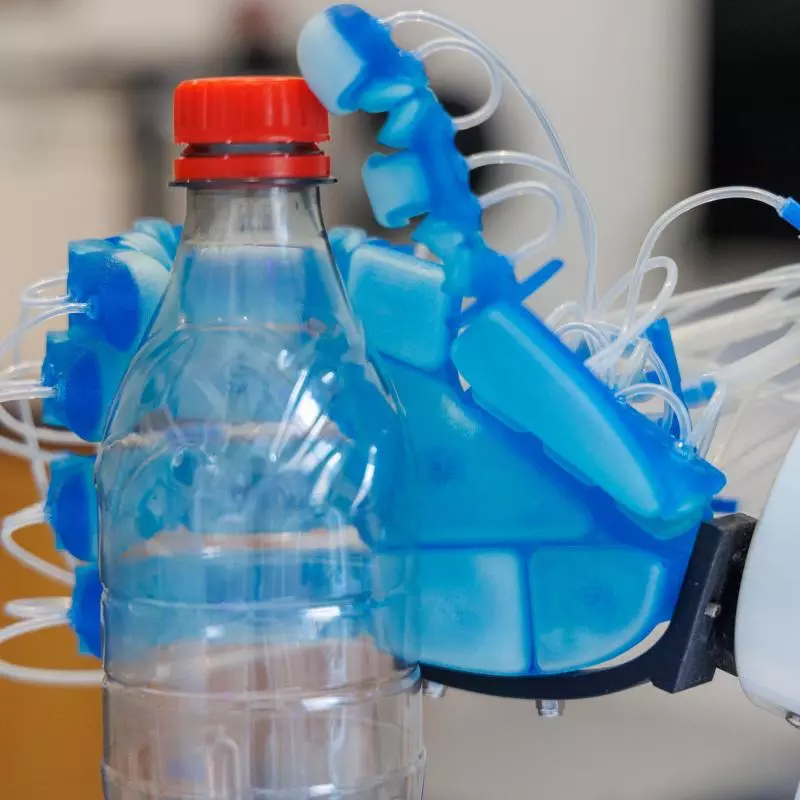
Theme A - Sense:
Embodied intelligence hinges on rich perception of the physical world, yet robots often lack the crucial sense of touch. Soft robotics, with its emphasis on compliance and mechanical intelligence, can improve robot resilience and versatility for manipulation tasks and human-robot interactions. This theme focuses on large-scale, flexible, tactile perception to enable novel sensing methodologies and provide a step-change in capabilities..
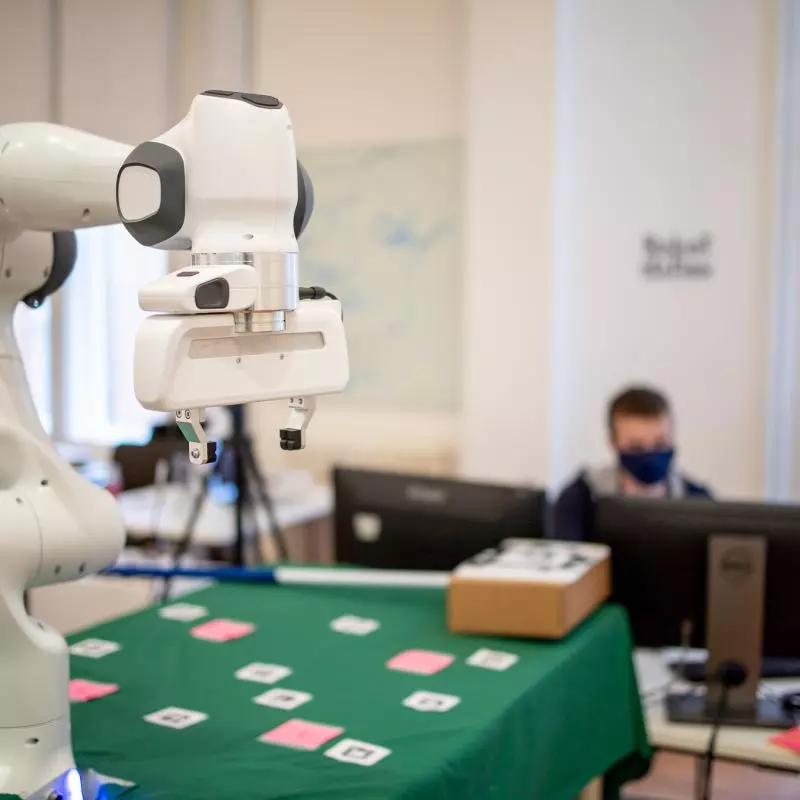
Theme B - Interpret:
Abstract, symbolic scene representations enable complex tasks and human-machine collaboration, but lack of labelled training data impedes wide-scale robot deployment. This theme focuses on driving supervisory input to zero and developing weakly- and unsupervised learning methods across multiple modalities, drawing parallels with human metacognition for safe, robust, and efficient autonomy.
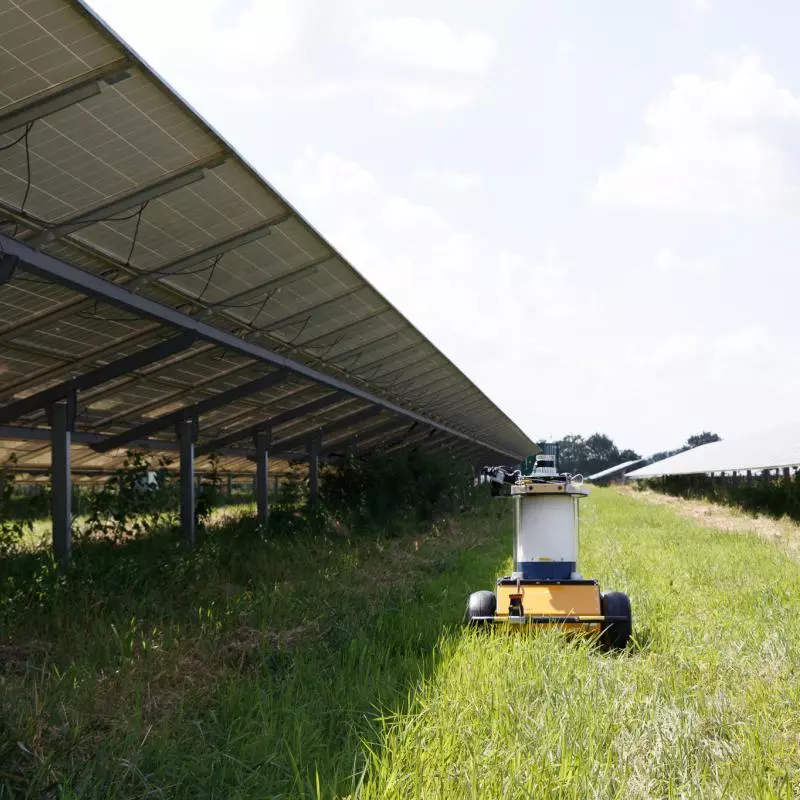
Theme C - Act:
In real-world scenarios, robots need to re-use previously learned skills and acquire new ones safely and efficiently. End-to-end control policies based on sensor data require too much labelled data for agile, collaborative contexts. This theme focuses on enabling robots to learn new skills with minimum user demonstration or within a learned world model, using versatile goal conditioning and active learning for reusable, honed skills.
Theme D - Navigate:
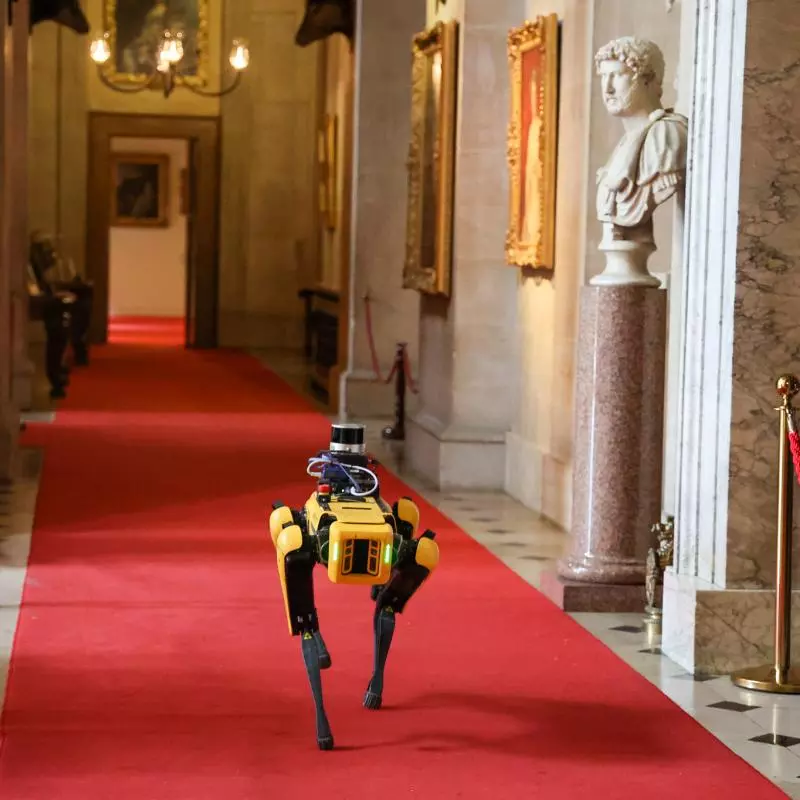
Robust robot navigation is crucial in Social Care, Logistics, and Manufacturing, where mobile manipulation is vital. Theme D explores unusual sensors, novel processing, and cross-modal mapping to improve machines' endurance and performance for autonomous navigation. We focus on developing algorithms for long-term, minimally supervised autonomy for robust and efficient navigation in various deployment scenarios.
Theme E - Coordinate:
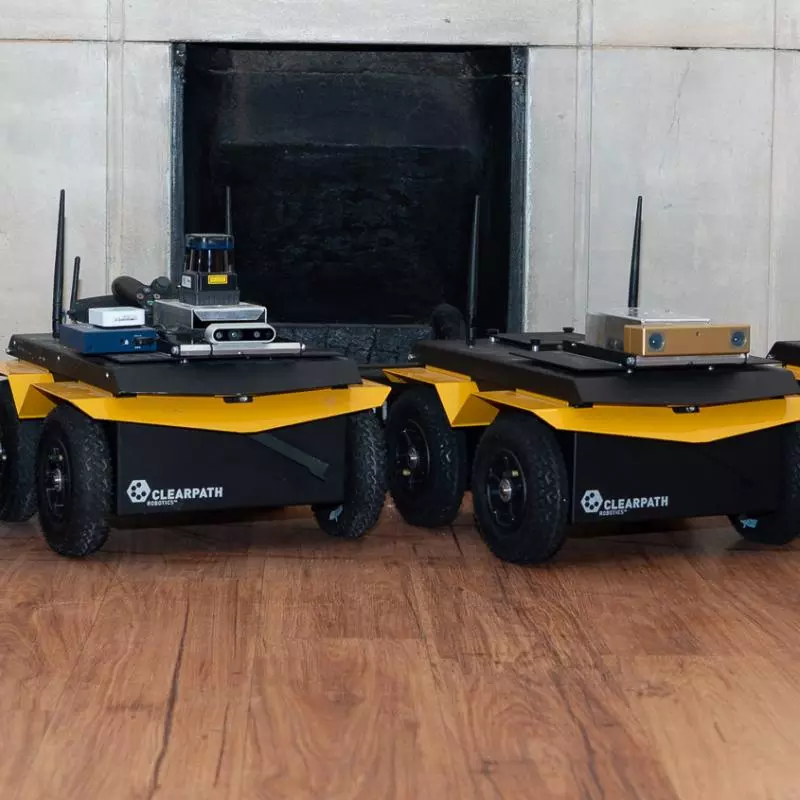
Theme E broadens research towards heterogeneous teams of autonomous agents in uncertain, dynamic environments. Many domains require multi-agent coordination, where uncertainty is present over robot and human locations and input. This theme addresses the challenge of creating and exploiting probabilistic models for coordination in human-robot and robot-robot systems.
Theme F - Collaborate:
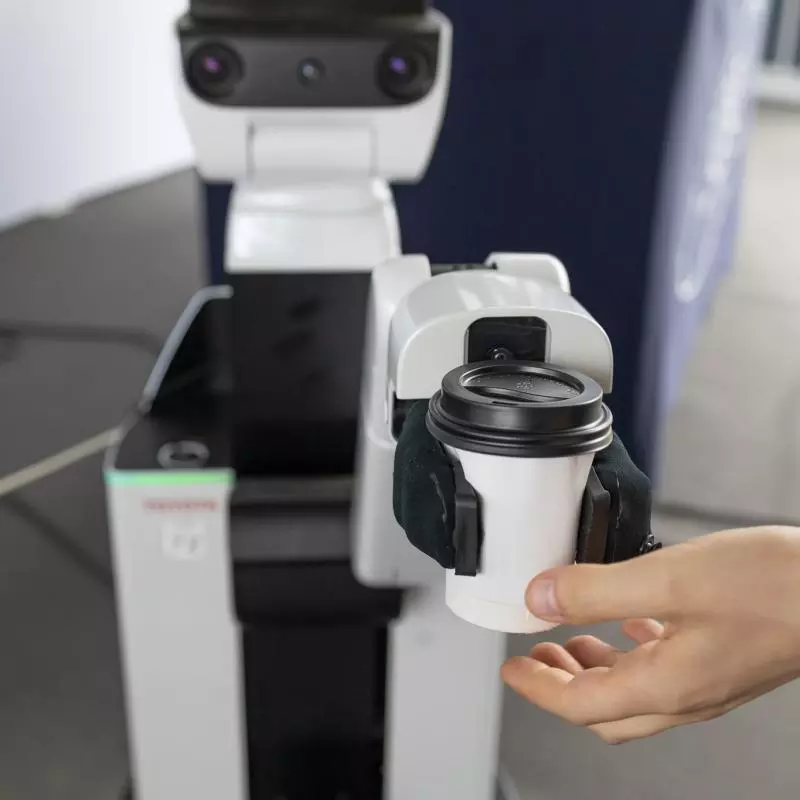
Enabling effective human-robot collaboration in physical tasks is crucial for our Flagship domains. This theme addresses the challenges of physical interaction and uncertainty in joint action planning, by leveraging learned models of human states and robot actions to shape interactions and ensure formal guarantees over joint behaviour.