

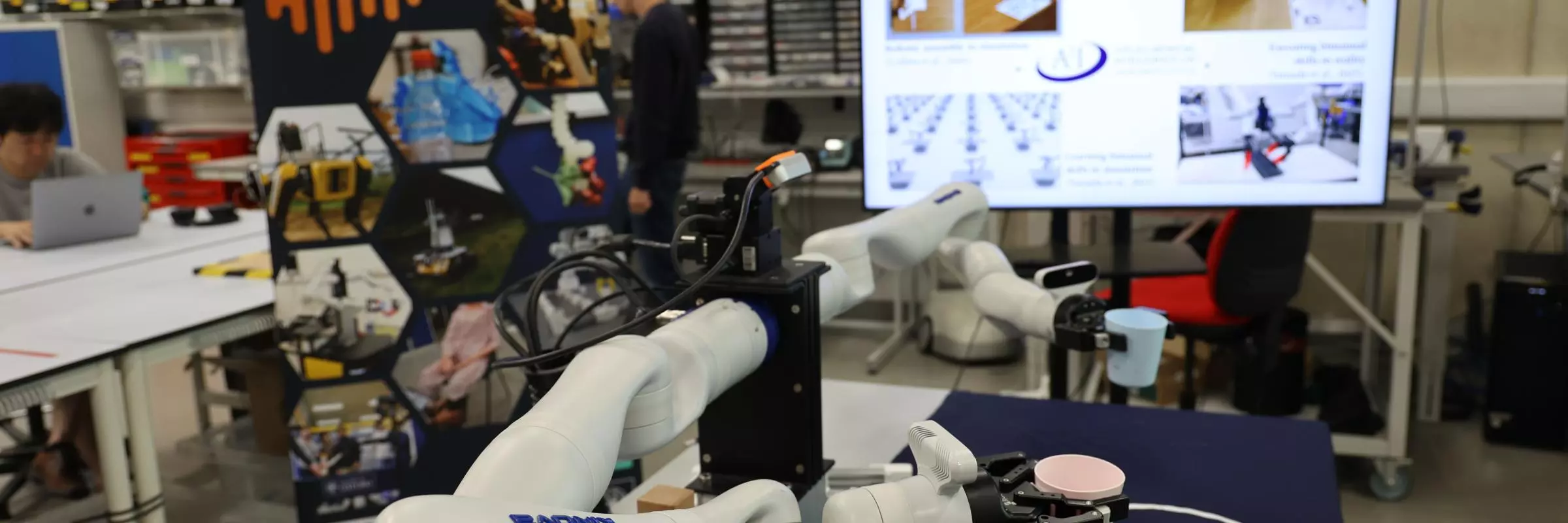
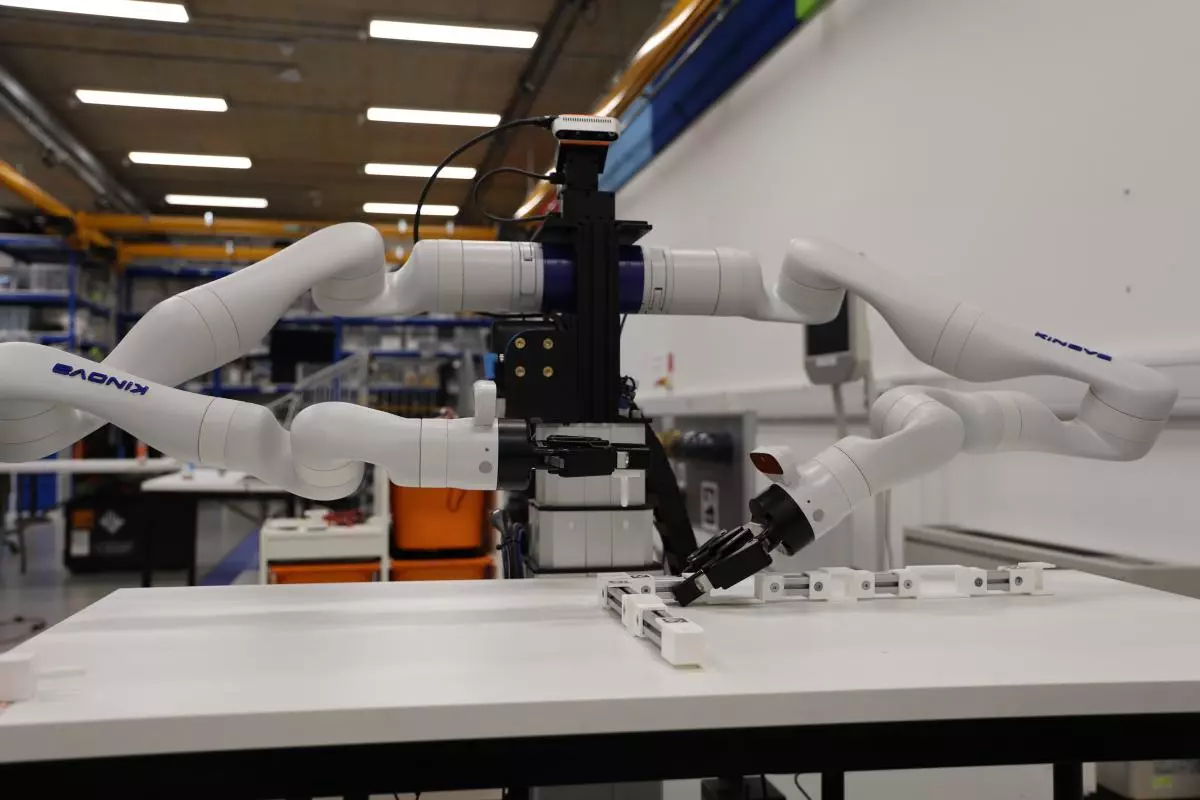
This is Frank!
Humans use two hands for a reason. Screwing on a lid, slotting together flat-pack furniture, untangling a knot — almost everything dexterous we do relies on both hands working in perfect coordination. Frank is a bimanual robot, meaning it has two arms that must learn to cooperate just like ours do. Teaching a robot this kind of two-handed teamwork is fiendishly difficult: each arm has to know not just what it is doing, but what the other is doing, and why. Getting this right unlocks a future where robots can handle the complex, fiddly assembly tasks that currently only human hands can manage.
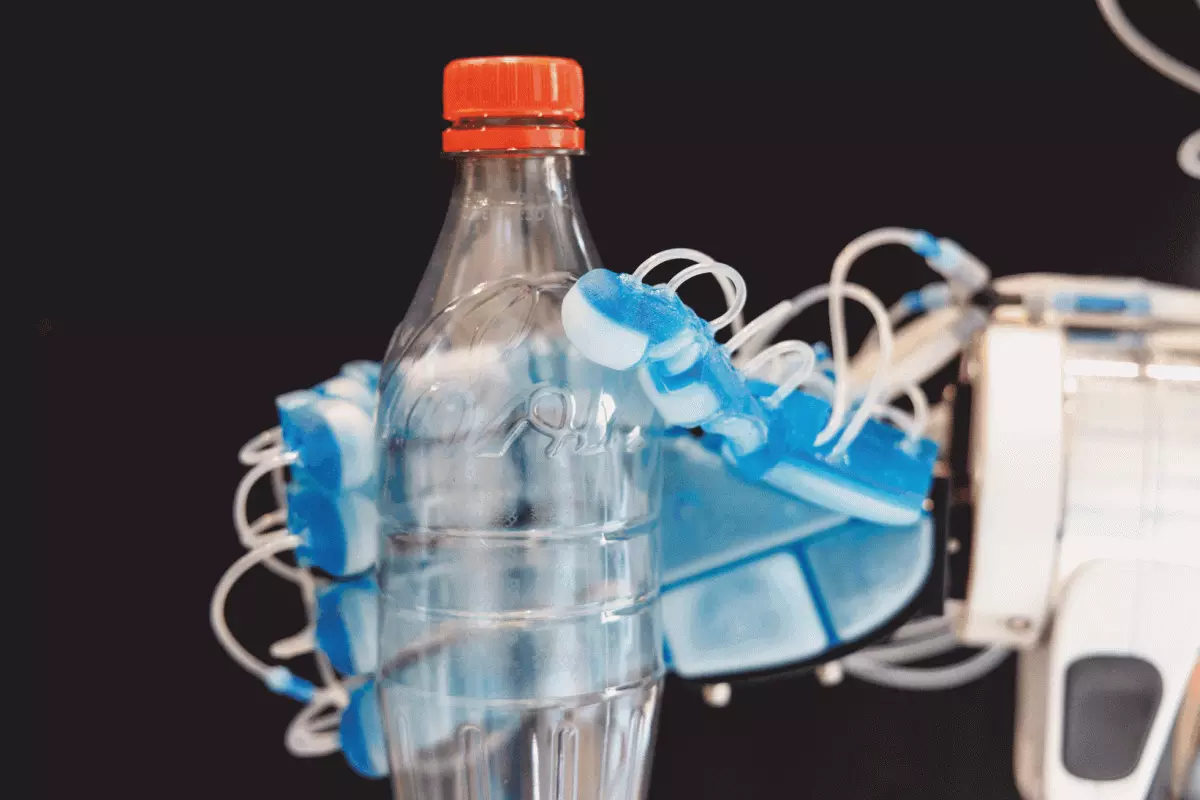
Look at the soft robot hand!
But strength and precision aren't enough; robots also need to feel. Human hands are wrapped in sensitive skin that gives us instant feedback: too tight, too loose, slipping, stuck. Rigid metal fingers have none of this. That's why researchers are developing soft robot hands covered in flexible, sensor-rich artificial skin that can detect pressure, texture, and contact in real time. For assembly tasks where a fraction of a millimetre matters, this sense of touch transforms a robot from a blunt instrument into something genuinely delicate and genuinely useful.